
Cybersecurity is not a one-time effort—it’s a continuous process. Threat landscapes evolve, new vulnerabilities emerge, and workloads scale. Sustaining a secure pipeline requires ongoing refinement, monitoring, and education to ensure your organisation stays ahead of potential risks.
For organisations aligned with NIS 2 and DORA, continuous improvement isn’t just best practice—it’s a necessity. These frameworks emphasise regular assessments, policy updates, and a proactive approach to maintaining resilience.
Why Continuous Improvement is Essential
Without ongoing refinement, security policies and practices can become outdated, leaving your pipeline vulnerable. Continuous improvement ensures:
- Policies adapt to new threats and technologies.
- Teams remain engaged and informed about best practices.
- Vulnerability management remains proactive, not reactive.
How Aqua CNAPP Enables Continuous Improvement
-
Regularly Audit Policies:
- Schedule periodic reviews of assurance and runtime policies in Aqua.
- Adjust thresholds and enforcement levels as teams mature and workloads evolve.
-
Monitor Vulnerability Trends:
- Use Aqua’s analytics to track trends in vulnerabilities and incidents.
- Focus on reducing the number of new vulnerabilities introduced, while addressing backlog issues systematically.
-
Expand Compliance Coverage:
- Add new benchmarks and compliance programs as your environment scales.
- Use Aqua’s CSPM tools to onboard additional cloud accounts and regions.
-
Educate and Engage Teams:
- Provide regular training sessions to keep teams updated on emerging threats and tools.
- Share success metrics, such as reduced vulnerabilities or improved compliance scores, to maintain motivation.
-
Incorporate Feedback Loops:
- Use lessons learned from incidents and audits to refine workflows.
- Engage stakeholders across development, security, and leadership to align on priorities.
Practical Example: Managing a Vulnerability Backlog
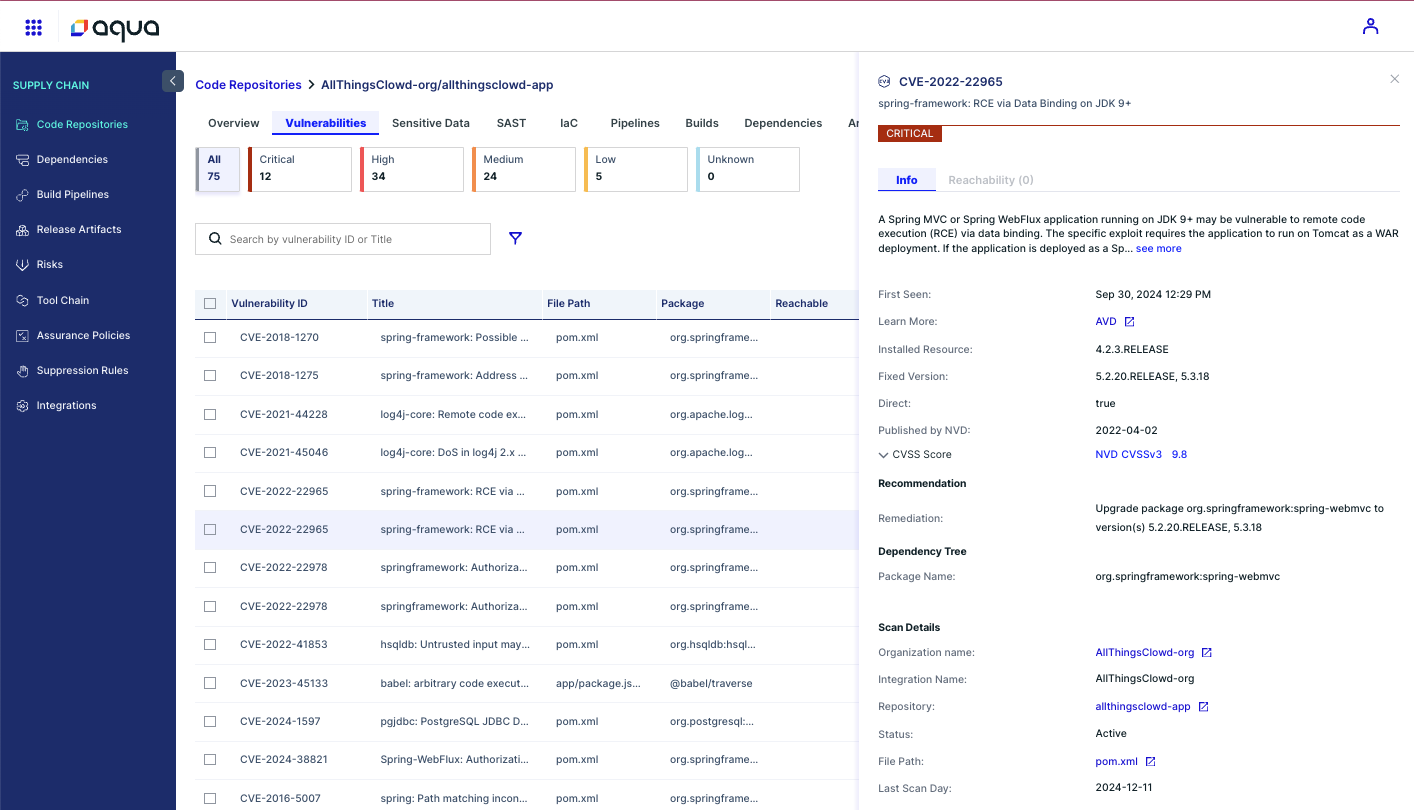
After an initial scan, an organisation may identify a backlog of vulnerabilities. Using Aqua, they:
- Categorise vulnerabilities by severity and exploitability.
- Assign remediation tasks to specific teams.
- Monitor progress through the centralised dashboard, ensuring that critical issues are addressed first.
This structured approach ensures vulnerabilities are systematically reduced without overwhelming teams.
Summary
Continuous improvement transforms cybersecurity from a reactive function into a proactive discipline. With Aqua’s tools, organisations can refine policies, monitor trends, and engage teams in a shared commitment to resilience. By embracing this mindset, you not only meet the ongoing requirements of NIS 2 and DORA but also build a pipeline that can withstand the challenges of tomorrow.
Conclusion
As we pull the curtains on our 12-part saga of “Shift Left and Lift Your Spirits with CNAPP,” I want to take a moment to do a few things: reflect, thank, and throw in a wee bit of festive cheer. Reflecting on the past year, I can’t help but marvel at the myriad of ways we’ve fortified our digital defences, almost as diligently as I’ll be defending my plate of Christmas turkey!
A huge ‘thank you’ goes out to everyone at Aqua Security. Working alongside you has been nothing short of a masterclass in collaboration, innovation, and occasional meme wars. As I bid farewell to Aqua Security to explore the enigmatic world of API security, I look forward to unraveling new mysteries, probably with the same enthusiasm I reserve for unwrapping presents under the Christmas tree.
And as this Irish lad gets ready to embrace new adventures and forge new friendships, let me send off some holiday cheer in the language of my homeland: Nollaig shona duit (Merry Christmas) and Athbhliain faoi mhaise duit (Happy New Year)! Here’s to a season filled with warmth, laughter, and top-notch security practices (because cyber threats never take a holiday, do they?). 🎄🔒
Sláinte

 Cumulus Chatter with a Sprinkle of AI
Leave a comment